Woven against knitted fabric
Short answer: Woven fabric holds its shape and barely stretches, while knitted fabric stretches and follows the body. That is why woven is used for shirts and knitted for t-shirts. The difference also decides how a piece wrinkles and how you should store it at home.
How woven fabric is built
Woven fabric is made of threads that cross at right angles and sit fixed against each other. That gives a dense, stable surface that holds its shape and gives little. The fabric barely stretches unless elastic threads are added, so a woven shirt should be the right size from the start.
How knitted fabric is built
Knitted fabric is made of stitches that interlock in rows and loops. The stitches can be pulled out and give way in every direction, which is why knitted fabric follows the body and moves with it. That makes it comfortable for pieces that sit close to the skin, like a t-shirt or a dress.
How they wrinkle
Woven fabric wrinkles more, because the threads sit fixed and keep the creases they get. It can also be pressed sharply and hold a crease. Knitted fabric wrinkles less and straightens itself on the body, because the stitches give and slide back. That is a real advantage when you travel or dislike ironing.
How they feel
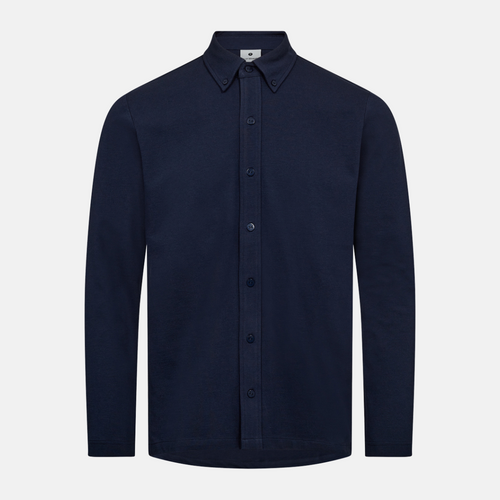
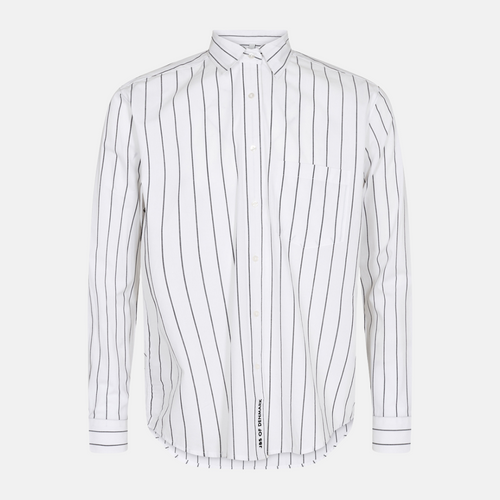
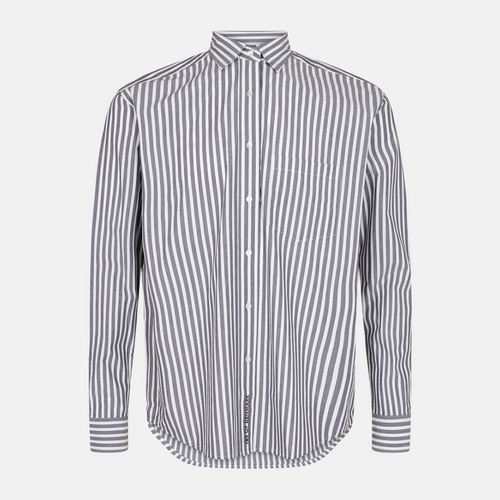
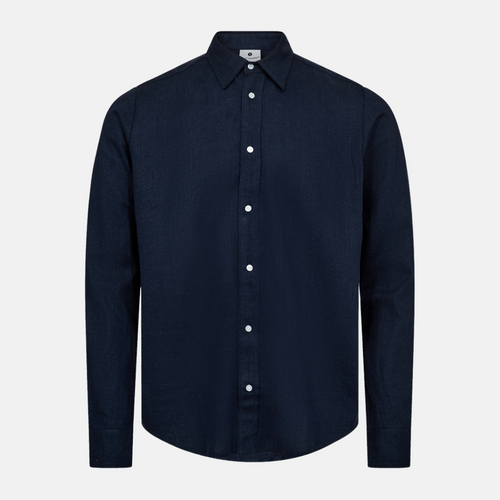
Woven fabric feels firmer and more structured, and it stands away from the body instead of following it. Knitted fabric feels softer and more yielding, because it moves with you. On a bamboo shirt for men you feel the firm, smooth surface that is typical for woven fabric.
What is used for what
Shirts, bedding and many trousers are often made in woven fabric, because flat surfaces should stay smooth and stable. T-shirts, underwear and jumpers are knitted, because they should follow the body. Dresses come in both, and the choice decides whether the dress falls stiff or soft. See bamboo dresses for examples.
Woven fabric in bed
Bedding is a good example of woven fabric, because the cover should lie smooth and keep its shape, even when you turn over. The threads sit fixed and give an even surface without pulling out. That is a different job from a t-shirt, which must move with the body. Read more about bamboo bedding.
What should hang and what should lie
Woven on a hanger, knitted folded on a shelf. Woven fabric keeps its shape when it hangs and gets smoother from it. Knitted fabric is pulled long by its own weight, especially at the shoulders, so a shelf is better. It is one of the few storage rules with a purely physical reason.
Washing and care
Woven fabric often needs to be hung up after washing while still slightly damp, so it does not set deep creases. Knitted fabric can dry flat or on a line without being stretched. Always follow the care label of the individual garment, because it depends on both fabric and yarn.
How to choose
Choose woven when the piece should hold its shape and look tidy all day. Choose knitted when comfort and movement come first. If you need both, combine a woven shirt over a knitted t-shirt, and you get structure and softness in the same outfit.
Frequently asked questions
How can you see the difference
Stretch the fabric across the width with both hands. Knitted gives clearly and springs back, while woven barely moves. You can also look at the threads, since woven has a dense, regular surface and knitted is made of small stitches.
What wrinkles the most
Woven fabric wrinkles the most, because the threads sit fixed and keep the creases. It is also the fabric that presses best and holds a sharp crease, if you want a tidier look.
What should hang and what should lie
Woven hangs on a hanger and knitted lies folded on a shelf. Knitted is otherwise pulled long by its own weight, while woven keeps its shape even when it hangs in the wardrobe for a long time.
You can find the full range at Bamboo-Clothing.com.