CCDK is a Danish brand with a Scandinavian, minimalist idiom and a clear centre of gravity: the night. With us the brand is first and foremost a sleepwear label, and that is where the great majority of the range sits. The rest is soft underwear in the same spirit.
The design is calm and without decoration. No prints, no large logos, no frills that have to fall right. Instead the work has gone into cuts that can lie down, which sounds trivial but is the single thing separating good sleepwear from bad: seams have to sit where they do not press when you lie on your side, and a pair of pyjama bottoms has to follow when you turn over.
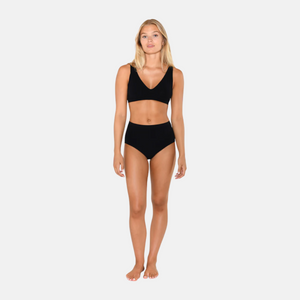
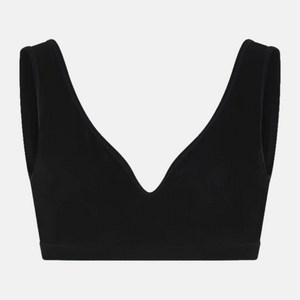
Alongside the sleepwear there is a smaller selection of panties, wireless bras, tops, slips and loungewear. Same qualities, simply cut to be worn during the day.
Why the material matters most at night
The body regulates temperature differently when you sleep. Your core temperature falls as you fall asleep, stays low through the night and rises again towards morning, and along the way you change position and pull the duvet up and down. A fabric that holds heat and moisture works against all three movements.
Bamboo viscose does the opposite. The material carries both heat and moisture away from the skin, so you neither lie clammy in summer nor cold after sweating in winter. That is why bamboo sleepwear is so often recommended to people with night sweats, those who sleep warm, or women going through menopause, where the temperature shifts arrive suddenly.
The other half is softness. Sleepwear is worn directly against the skin for eight hours with nothing in between, and if a seam or an edge chafes, you find out in the middle of the night. Bamboo fibres are round and smooth, so the fabric lies flat instead of pricking.
Sleepwear wears differently from other clothes
A set of sleepwear is used every single night and washed far more often than the rest of the wardrobe, and that is worth keeping in mind when choosing. Eight hours of wear times seven nights adds up to more hours a week than anything else in the cupboard, and yet sleepwear is typically what people spend the least on and replace least often.
Bamboo viscose handles that treatment better than cotton on one particular count: it does not stiffen from repeated washing. Cotton hardens over time, and a set that was soft for the first six months is not after two years. Bamboo fibres keep their smooth surface, and most people find that sleepwear grows softer rather than harder.
About sizing
Sleepwear should not fit close. If you are choosing between two sizes, take the larger, both because you turn over in your sleep and because a loose cut lets air circulate, which is half the point of a breathable material. That applies especially to nightdresses, where the fabric has to follow when you lie on your side.
How to choose
If you sleep warm, a nightdress or a short sleeved set is usually right, because there is less fabric against the body. If you sleep cool, or the bedroom is cold, a pyjama set with long legs gives more. Many people buy both and switch by season, but the advantage of bamboo is precisely that one set can handle a wider temperature range than cotton.
As a gift, the nightdress is the safest choice, because only one size has to fit rather than two pieces that both have to sit right.
Washing and care
Wash at 40 degrees without fabric softener. Softener leaves a film on the fibres that takes exactly the moisture transport making the sleepwear comfortable. Sleepwear can go in the tumble dryer on low heat, but keep it away from high heat if there is elastic in the waistband. Turn it inside out to reduce surface wear and keep the smooth drape longer.
Where it fits in
For comparing sleepwear, Boody is the other brand with a real selection for the night. If you want the same material in the bed, Turiform makes bamboo bedding, and Nordic Weaving covers the bathroom.