Bamboo throws and blankets and why they are not warm in the same way
Short answer: A bamboo throw insulates less than wool, but feels more even to lie under. It does not get clammy, because the fabric moves moisture away instead of holding on to it.
Even rather than warm
Wool insulates more and can quickly get too warm indoors, especially in a heated living room. Bamboo viscose keeps a more even temperature, which is nicer when you fall asleep on the sofa and wake an hour later. You avoid waking up sweaty and kicking the blanket off. See home and homewear in bamboo.
Why it does not get clammy
When you lie under a blanket, your body gives off moisture. A fabric that holds on to it gets clammy and feels cold when you move. Bamboo viscose moves the moisture away and releases it into the air, so the throw feels dry against the skin, even after a long time. Many notice that difference the first time.
Weight decides the feel
A heavy throw feels calming to lie under and stays put when you turn over. A light throw is more useful in summer and easier to carry around the house. The two cannot be combined in one piece, so think about what you will use it for most before you choose.
A throw for the sofa
A throw on the sofa is used for films, naps and reading. It should be big enough to cover you from shoulders to feet when lying down, and light enough to fold over the armrest. A throw in a calm colour suits most living rooms and looks tidy when left out.
A blanket for the bed
A blanket over the duvet gives an extra layer on cold nights and can be pushed to the foot of the bed when it gets warm. In summer, a light blanket can replace the duvet entirely. Because bamboo keeps an even temperature, it feels comfortable both early in the night and towards morning.
Matching the rest
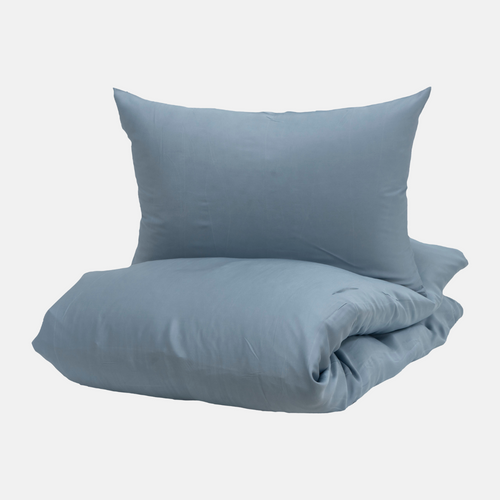
If you have bedding in the same material, it behaves the same way in the wash and feels the same against the skin. That makes it easy to wash everything together and gives a consistent feel in bed. See bamboo bedding.
Wash rarely, air often
A throw aired for an hour on a balcony or by an open window rarely needs washing. Wash at 40 degrees when needed and skip fabric softener. Use the dryer only on low heat, or hang it over a line. See washing and care.
Lint and wear
A throw may shed a little lint in the first weeks of use and washing. This comes from loose fibres and usually fades over time. Wash the throw on its own or with similar textiles, and not together with clothes that have zips or Velcro, which can pull at the fabric.
Storage
Fold the throw loosely and keep it on a shelf or in a basket where it can breathe. A plastic bag traps moisture and can cause odours. If you put the throw away for the summer, wash and dry it fully first and store it in a fabric bag.
Frequently asked questions
Is a bamboo throw warm enough in winter?
Indoors, yes. It insulates less than wool, but feels more even to lie under and does not get too warm in a heated living room. For a cold conservatory, wool may be the better choice.
How often should a throw be washed?
Rarely. Airing it now and then is enough if it is not used directly against the skin. If you use it every day as a blanket in bed, wash it every two or three weeks.
Do bamboo throws shed lint?
Usually less than throws in other materials, but a little lint can appear at first. It fades over time, especially if the throw is washed on its own.
You can find the full range at Bamboo-Clothing.com.