How bamboo fabric distributes heat
Short answer: The fabric does not distribute heat by itself. What happens is that moisture is moved away from the skin, and a smooth fabric draws heat away quickly on contact, so the feeling is a comfortable one.
Coolness on contact
A smooth, dense fabric makes good contact with the skin. When you put it on, it draws heat away from the skin in the first moment, and that is felt as a slight coolness.
Moisture transport
Moisture on the skin pulls heat out of the body, because water conducts heat far better than air. When moisture is moved away from the skin and into the fabric, the skin feels drier and more comfortable. Bamboo viscose absorbs moisture into the fibre itself, so you notice the clammy feeling less when you get warm during the day.
Air between the layers
Warmth is not held by the fabric alone but by the still air between layers. A thin bamboo layer next to the skin and a warmer layer on top therefore give more warmth than one thick jumper. You can also remove a layer when the temperature changes. Read more about the principle in layering in the transitional seasons.
What it is not
The fabric does not react to temperature and does not change its properties with the weather. It has no built in thermostat and does not get warmer when it is cold outside. What you feel is the sum of moisture transport, contact and air. For a plain explanation of the terms, see what temperature regulation in clothing actually means.
In bed
The effect is most noticeable at night, when the body releases moisture for hours under a duvet. A cover that absorbs moisture makes the bed less clammy, and the smooth fabric feels cool when you lie down. The weight of the duvet still decides most of the warmth, so choose it by season. See the range in bamboo bedding.
In everyday clothing
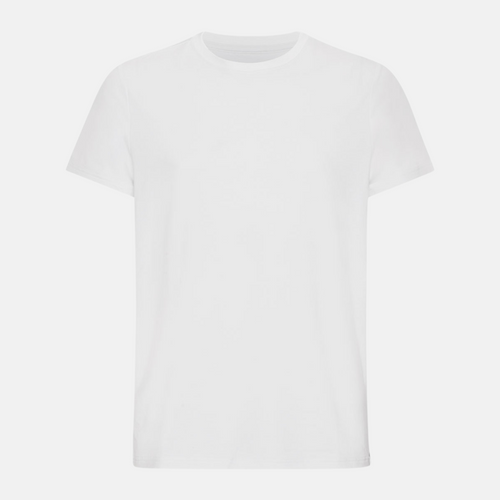
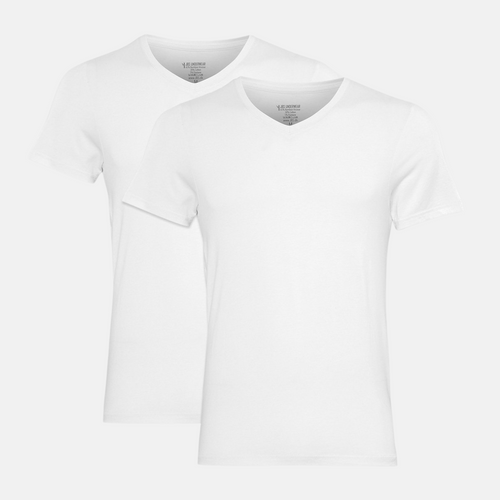
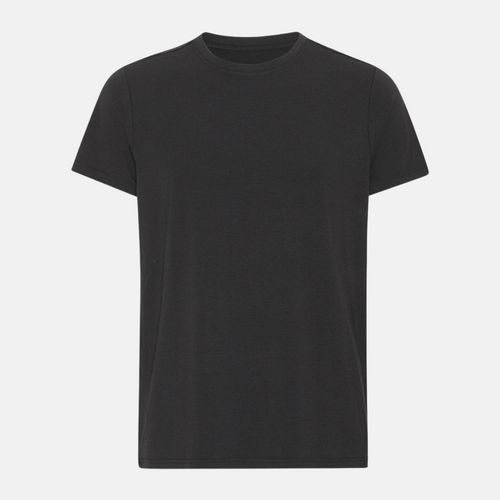
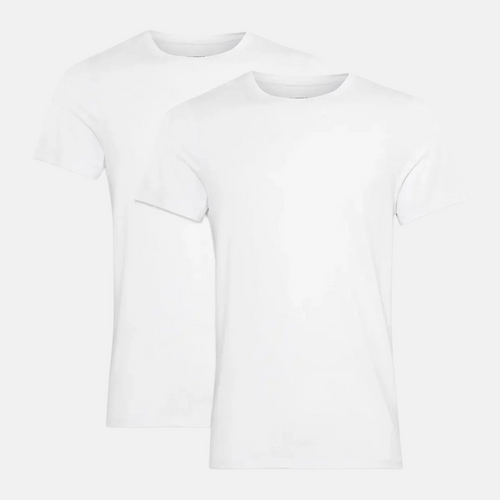
During the day, the layers closest to the skin matter most. A thin t-shirt under a shirt or knitted jumper takes up moisture before it reaches the outer layers. This makes the biggest difference when you move from the cold outside into warm rooms. See the basics in bamboo t-shirts for men.
See also
Temperature and clothing is a subject where the words are often bigger than what actually happens in the fabric. If you want to understand how fibres, moisture and air work together, there is a longer explanation in bamboo and temperature regulation.
Summer and winter
The same property is felt as cooling in summer and as warmth in winter, because the skin is kept dry either way. In summer, sweat evaporates faster from the fabric, and in winter you avoid feeling cold in damp clothes after a walk. For the cold season, read more in bamboo clothing for cold days.
Washing and the effect
The properties last best when the fibres stay open. Fabric softener leaves a thin film on the fabric that reduces its ability to absorb moisture, so it is best left out. Wash at 40 degrees with a mild detergent and let the clothes air dry.
What you can do yourself
The clothing only does part of the work. Choose layers by the weather, and take a layer off before you start to sweat rather than afterwards. Keep the bedroom cool and air it in the morning. And choose a fit where the fabric sits close enough to take up moisture, but not so tight that there is no room for air.
Frequently asked questions
Can fabric distribute heat?
Not actively. The fabric moves moisture away from the skin and draws heat away on contact, but it has no function that reacts to temperature or changes its properties with the weather.
Why does bamboo feel cool?
A smooth, dense fabric makes good contact with the skin and draws heat away at first touch. At the same time the fibre absorbs moisture, so the skin feels dry for longer.
Does bamboo keep you warm in winter?
Warmth is mostly held by the air between layers. An inner bamboo layer helps by keeping the skin dry so you do not get cold in damp clothes, but you still need warm layers on top.
You can find the full range at Bamboo-Clothing.com.