How to check a certificate yourself
Short answer: Find the number on the label or hang tag, look it up with the scheme it belongs to, and check that the product, producer and date match what you are holding. Without a number you cannot verify anything yourself, and a logo alone is not proof.
Start with the number
A certificate normally has a number printed on the label, hang tag or packaging. Without it, nothing can be looked up. If there is only a logo, there is nothing concrete to check, and you cannot judge whether the claim holds. Note the number down before you search the scheme's website.
Find the right scheme
Every label belongs to a particular scheme, usually with a public website and a register. The scheme's name typically sits next to the logo or number. Look it up there rather than through a search that may lead to lookalike pages. Use the address the scheme itself gives.
Look at the scope
The entry states which product groups the certificate covers. If your item is not among them, it does not apply, even if the same logo is attached. See Boody, compare the composition of the item with what a label claims, and then read the entry to see what it actually covers.
Check the producer
The entry names the company the certificate was issued to. If the name does not match the producer or brand on your item, ask why. It may be one link in the chain with its own certificate, and then that link is covered, not necessarily the whole item.
Check the date last
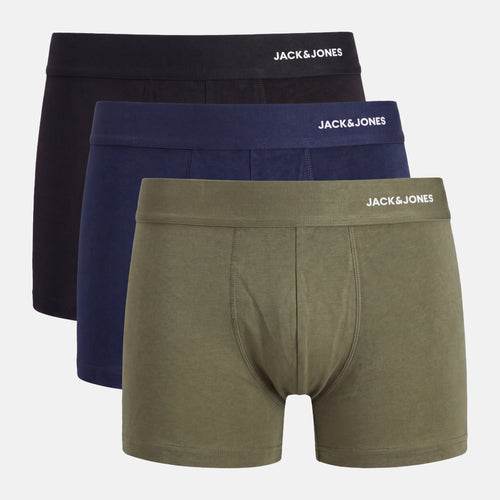
An expired certificate only says something about the past. The date is always in the entry, both issue and expiry, and you can see whether it fits the time the item was made. See JBS of Denmark and Jack and Jones to compare how brands describe their labelling.
A logo without a number
Some schemes allow a logo without a number, but then you cannot check anything yourself. The logo is a claim, not proof. Feel free to ask for the number if the information matters for your purchase. A serious seller can give it or explain why there is none.
If the number is not found
If the number is not in the register, that does not mean the item is fake. There may be typing errors, old numbers or several registers. But you can ask the shop, and a good answer comes quickly. If none comes, do not treat the label as valid until you get an explanation.
Looking it up on your phone
Looking in the public registers is free and takes a few minutes, even on a phone. You can do it in the shop before buying or at home afterwards. Photograph the label so the number is not lost when you cut it off, and keep the picture with the receipt.
What the entry does not answer
Even a valid certificate only says something about what it was made to test. It does not say how long the item lasts or how it fits. Use the entry to check a claim, and judge the rest of the item by composition, weight and size chart.
Frequently asked questions
What if the number cannot be found?
Then ask the shop before you treat the label as valid. There may be a simple explanation, but you can ask for an answer that can be checked.
Does it cost anything to look up?
No. Looking in the public registers is free, and many schemes have a search function where you simply type the number and read the result.
Can a logo appear without a number?
Some schemes allow it, but without a number you cannot check anything yourself. Ask for the number if it matters for your purchase.
You can find the full range at Bamboo-Clothing.com.