Polyamide in bamboo socks and what it does
Short answer: Polyamide takes the wear at the heel and toe. Without it a bamboo sock would develop a hole within just a few weeks.
Where the wear happens
Almost all wear on a sock happens at three specific spots: under the heel, over the toe, and where the edge of the shoe rubs against the fabric. Makers place polyamide exactly at these three spots, while the rest of the sock can be soft bamboo fabric. That gives a sock that feels soft yet still holds up to daily use.
What the percentage tells you
If the label says twenty five percent polyamide, it is not spread evenly across the whole sock. It sits concentrated in the wear zones, while the rest is dominated by bamboo viscose. That is why a sock with twenty percent polyamide can still feel soft across the whole foot, even though the number at first sounds like a high synthetic share.
The balance that works
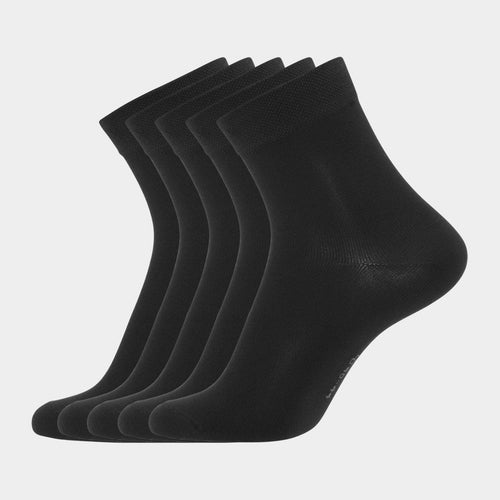
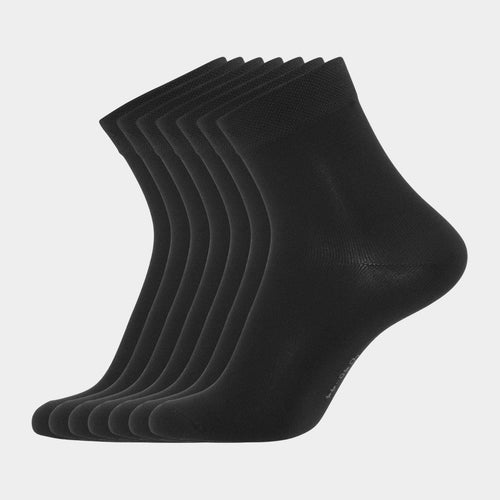
Too little polyamide gives a soft sock that quickly develops a hole at the heel and toe. Too much gives a sock that feels synthetic against the skin and starts to smell sooner. See bamboo socks for men. Most good bamboo socks land between fifteen and thirty percent polyamide, depending on their use.
The role of elastane
Elastane is the third fiber in a typical bamboo sock and keeps the sock up on the leg through the day. Two to five percent is enough for this purpose. Without elastane, the cuff slips no matter how well the rest of the sock is otherwise knitted, because the hold comes entirely from this small share of stretchy fiber.
The difference between everyday and sports socks
Ordinary everyday socks typically carry a lower polyamide share than socks made for sport or running, where the wear is noticeably harder. A tennis sock or a running sock can therefore have a higher polyamide share right at the heel and toe. See bamboo tennis socks for men. The purpose of the sock decides the right balance between softness and strength.
How polyamide feels
Polyamide is a smooth, lightweight fiber that does not absorb moisture the way bamboo viscose does. In the wear zones that matters less, since strength is the main job there rather than comfort. Across the whole foot, a high polyamide share would instead feel warmer and less pleasant than a sock dominated by bamboo viscose.
Lifespan
A sock with polyamide placed well in the wear zones typically lasts noticeably longer than a sock made from pure bamboo viscose, because the exposed spots are reinforced exactly where the wear actually happens. See all bamboo socks for women. The rest of the sock can still stay soft without compromising on durability.
Washing and care
Polyamide generally tolerates higher temperatures than elastane and bamboo viscose, but always wash according to the most sensitive fiber in the sock. That usually means thirty degrees and no fabric softener. High heat does not damage the polyamide itself, but it breaks down the elastane, and then the sock loses its ability to sit snugly on the foot.
How to choose the right sock
If the sock is for everyday wear and should feel soft, choose a lower polyamide share around fifteen percent. If it is for sport or long days on your feet, choose a higher share for extra strength in the wear zones. Always check the care label to see the exact split between the fibers.
Frequently asked questions
Is polyamide the same as nylon
Yes. Polyamide is the technical and official name for the fiber group that the trade name nylon belongs to. The two words are therefore often used for the same material.
Can you buy socks without polyamide
Yes, but they wear out noticeably faster at the toe and heel, because those spots then consist only of the softer and less durable bamboo viscose alone.
Does a sock smell more with more polyamide
Yes, slightly. Synthetic fibers like polyamide hold onto oil and sweat from the skin better than natural fibers do, which can cause a somewhat stronger smell over time.
You can find the full range at Bamboo-Clothing.com.