Socks with thin heels
Short answer: The heel wears thin long before a hole appears. It is caused by friction against the heel counter of the shoe and is the first sign that the sock is nearing the end of its life.
Where it happens
The heel and toe wear first because that is where the shoe rubs most. With every step the heel slides slightly up and down against the heel counter, and the toes press into the front of the shoe. Over time the yarn thins and the fabric turns see through long before a hole appears.
The right size
A sock that is too small is stretched all day, and stretched yarn wears faster. A sock that is too big forms folds that rub. The heel of the sock should sit right over your heel, not under your foot or up your ankle. See sock sizes if in doubt.
The shoe
A heel counter with a rough or worn lining wears socks faster than a smooth one. Check the inside of your shoes, especially the ones you wear most. If the lining has broken, hard edges can rub holes in socks quickly. Then it is the shoe that needs repairing or replacing.
Reinforcement
Some styles have extra yarn or a denser knit in the heel and toe. That makes the exposed areas more resistant without making the rest of the sock thicker. If you walk a lot, it is worth looking for. Read more in reinforced heel and toe and what it means.
Replace them together
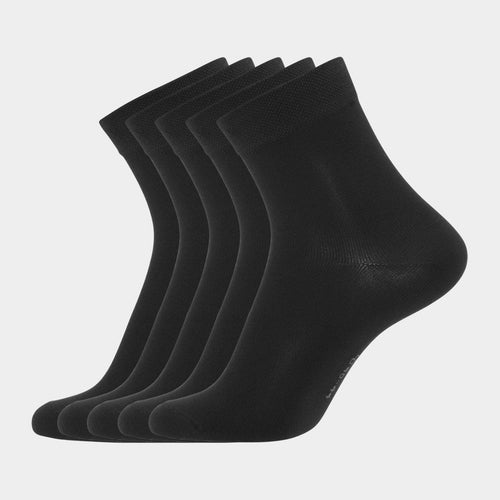
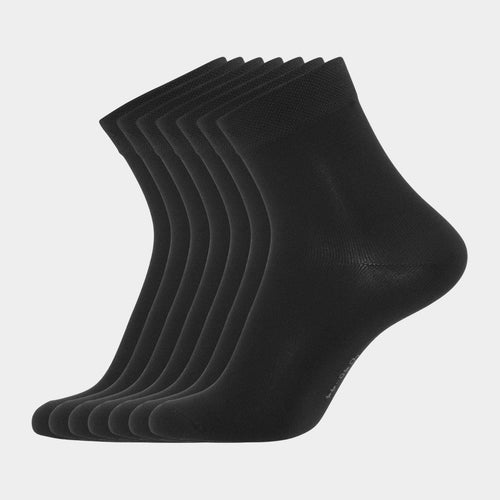
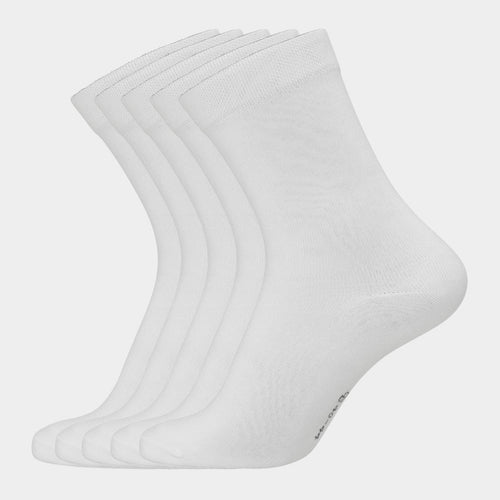
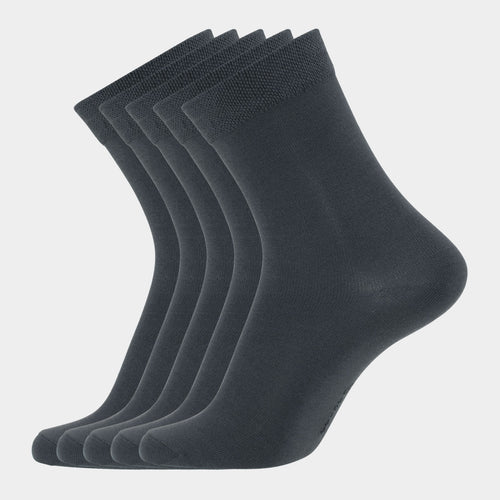
If half the pile has thinned at the heel, the rest is usually heading the same way. Socks bought together and worn equally wear out at the same pace. Replace the whole pile at once so you are not left with odd pairs. See all bamboo socks for men.
See the range
For shoes with a hard heel counter and for sport, a heavier sock is often a good choice. It has more yarn to wear through and gives a little more cushioning at the heel. See the heavier styles in bamboo tennis socks for men, available in several lengths.
Washing
Turn socks inside out before washing. The outside then wears least, and lint and dirt from the inside rinse out better. Wash at a moderate temperature and dry them hanging rather than in a tumble dryer. See the washing guide for the rest.
New shoes wear the most
In the first weeks with new shoes the heel wears fastest, because the heel counter has not yet shaped itself to your foot. Consider a slightly heavier sock during that period. Once the shoe is broken in, the wear eases. See the soft styles in bamboo socks for women.
Rotate several pairs
With many pairs to rotate, the wear is spread out and each sock lasts longer. The yarn also gets time to rest and recover its shape after washing. A pair worn every other day lasts noticeably longer than a pair worn daily.
When the sock is worn out
If you can see light through the heel, or it feels thin and smooth, the sock is almost worn out. It will still do at home in slippers, but a hole is coming. If the same socks always go first, look at the size and the shoes.
Frequently asked questions
Why does the heel wear thin?
Because it rubs against the heel counter of the shoe with every step. The friction thins the yarn over time, long before a hole actually appears in the sock.
Can it be prevented?
The right size, smooth heel counters and socks with a reinforced heel all help. Rotate several pairs too, and wash socks inside out at a moderate temperature.
Should I replace all my socks at once?
If they were bought together and worn equally, they are equally worn. Replacing the whole pile is then the easiest way to avoid ending up with odd pairs.
See our range of men's bamboo socks.