Warm Nightwear for Winter – Without the Sweat
Short answer: Warm nightwear for winter does not have to be thick, it has to regulate temperature. Nightwear in bamboo viscose warms when it is cold and moves the moisture away if you get too warm under the duvet. So you are not cold at bedtime and do not perspire at three in the morning.
Thick nightwear is often a trap
Fleece and thick towelling qualities feel warm when you lie down, but they cannot let the moisture out. After a couple of hours under the duvet you lie in a damp layer that turns cold as soon as you push the duvet aside. That is when most people wake.
It is the duvet that warms
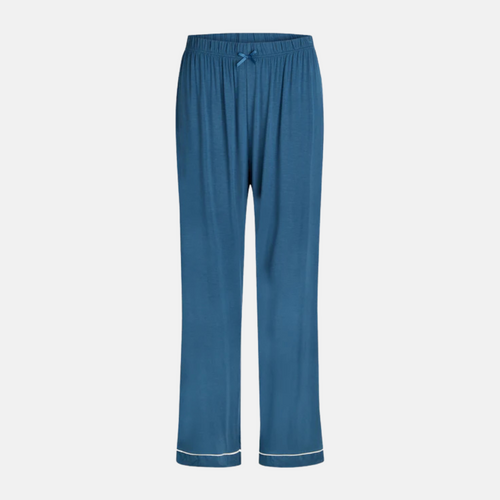
The job of nightwear is not to insulate but to keep the skin dry while the duvet provides the warmth. That is why a thin layer that moves moisture beats a thick one that holds it. See the long models under bamboo night trousers for women.
Layers rather than thickness
If the bedroom is cold, add a thin layer instead of switching to a thicker one. Two thin layers can be adjusted along the way by taking one off, and a thick layer cannot. It is the same rule as for clothes outdoors in winter.
Long sleeves and long legs
In winter the shoulders and the lower back get cold first, because the duvet slips aside. A long nightdress or a set with long legs covers both. See the range of bamboo nightdresses for women in the longest models for the coldest months.
The morning is coldest
Body temperature is at its lowest just before you get up, and a cold floor does the rest. A bamboo dressing gown for women over the nightwear solves the half hour before the house has warmed up, without changing anything about the warmth in bed.
The bedding plays a part
Nightwear and bedding work together. Bedding in the same material carries the moisture on rather than holding it, and that matters more to a warm night than the nightwear alone does. See the range under bamboo bedding in the usual sizes.
How to find your temperature
If you sleep with bare feet outside the duvet, the nightwear is too warm, not the duvet. If you wake clammy at three, it is usually the material and not the amount of fabric. Try a thinner layer in the same length before you change the duvet.
Washing in the winter months
Wash at 30 degrees without fabric softener, which lays a film in the fibres and slows exactly the moisture transport meant to keep you dry. Hang the nightwear to dry, and wash sets together so the top and bottom fade at the same pace through the season. See also bamboo and temperature regulation and sleeping better with bamboo.
Frequently asked questions
Is thick nightwear warmer?
It feels warmer at first, but it holds on to the moisture. A thin layer that moves perspiration away gives a steadier temperature all night.
Why do I wake up clammy in winter?
Because the fabric cannot release the moisture under the duvet. Change to a thinner layer in a material that moves moisture before you change the duvet.
Should you sleep in socks in winter?
It helps many people fall asleep, because warm feet lower body temperature faster. Choose thin socks, so the feet do not end up perspiring.
See our range of bamboo sleepwear.