What an environmental label actually says
Short answer: A label says something about the link it covers and nothing about the rest. Read what the small print says rather than looking at the logo.
What to find
Which link the label covers, who issued it, and a number that can be looked up. Those three details make a label possible to check. If they are not on the product page or the tag, you can ask the shop, and a clear answer is part of what you can expect.
Which link
Some labels apply to the raw material, others to the finished product, and others to the production itself. A label on finished clothing says something about the clothing, not necessarily about how the raw material was grown. Find out which link the logo covers before you let it affect your choice.
Who issued it
An independent label is issued by an organisation that does not sell the item itself. A label of its own is issued by the brand. Both can be reasonable, but they say different things. Find the issuer's name and see whether the organisation has a website where the requirements can be read.
The number
A number lets you look the label up and see that it is valid and applies to this very item. Without a number, the logo is only a picture. Write the number down if you want to compare two items later, or if you need to ask the shop about it.
What a label does not say
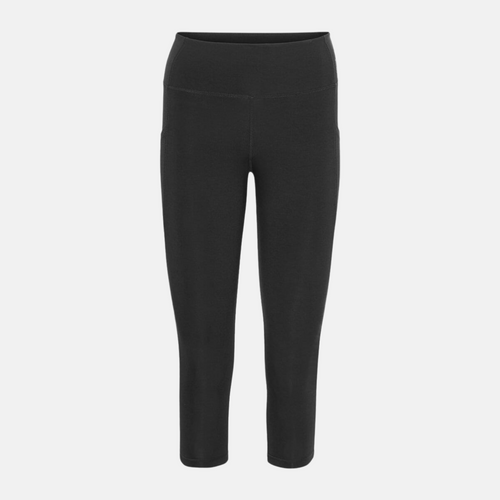
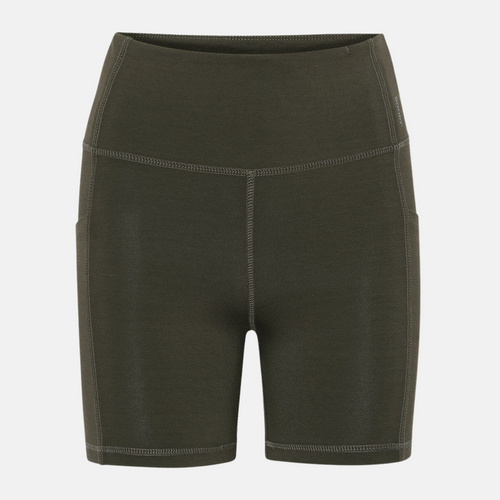
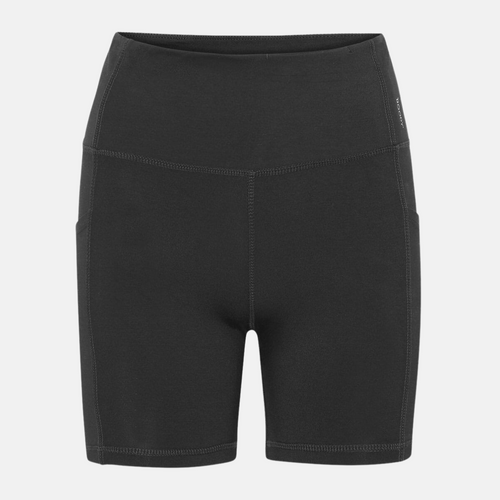
How long the garment lasts, and how many times you will wear it. A label does not tell you whether the size fits or whether you will grow fond of the piece. Your own choices decide the lifespan. See bamboo training clothes for women and judge fit and fabric yourself.
The two you meet most
OEKO-TEX on the finished product and FSC on the raw material. They cover two different links and cannot replace each other. If you meet both, they say something about one part of the chain each, and the two details can be read as a supplement to one another.
OEKO-TEX
The label sits on the finished product, which is the link you can hold in your hand. See certified products and read what it says about the item. Look up the number if there is one, so you can see that the label is valid.
FSC
The label applies to the raw material and therefore says something about the first link in the chain. See FSC certified products and read what it says. The label says nothing about how the fabric was woven or sewn, and you should bear that in mind when judging the whole garment.
Independent or its own
Some labels are independent, others are the brand's own. Look for an institute and a number. Own labels rarely have both. If in doubt, choose labels where you can find the issuer and the number, and also read the material composition, fabric weight and the garment's measurements.
Frequently asked questions
Is there a difference between labels
A big one. Some are independent, others are the brand's own. Look for the issuer and a number, because without them it is hard to know what the label really stands for.
How do you tell if a label is independent
There is an institute and a number. Own labels rarely have both. If you cannot find the issuer, ask the shop, or let the label count for less.
What should you look at besides the label
Material composition, fabric weight and the garment's measurements. Those three details can be compared across items and say something about how the garment will be to wear.
You can find the full range at Bamboo-Clothing.com.