What happens to clothes if you use too much detergent
Short answer: Excess detergent does not rinse out of the washing machine on its own. It stays in the fibres, makes the fabric stiff, traps odour, and can irritate the skin over time.
Residue stays in the fabric
If there is more soap in the machine than the water can fully rinse out, the excess settles into the fibres during the wash. That is why clothes sometimes feel stiff or heavy right out of the machine, even though they look perfectly clean on the surface. See washing and care.
It irritates the skin
Detergent residue sits directly against the skin all day, especially in close-fitting garments like underwear and socks. That is a common and often overlooked cause of itching and redness in exactly the clothing that is supposed to feel most comfortable. See bamboo underwear for women.
It traps odour
Soap residue holds onto odour molecules instead of letting them disappear during washing and rinsing. That is why clothes can smell noticeably off fairly soon after an entirely ordinary wash, when you would otherwise expect everything to come out clean and fresh. See bamboo underwear for men.
Dose according to water hardness
The dosage on the packaging already accounts for water hardness, and it is not just a loose suggestion you can round up freely. If the water where you live is soft, you often need less detergent than the table first suggests. See all bamboo socks for men.
An extra rinse cycle
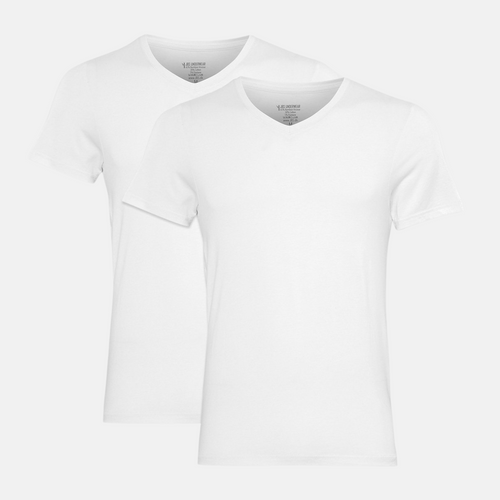
If you are unsure whether you dosed correctly, choose an extra rinse cycle on the machine next time. It costs only a little more water and electricity, but effectively solves the residue problem without having to change detergent or washing method. See bamboo T-shirts for men.
Do not overload the machine
An overloaded machine makes it harder for the water to rinse the soap fully out of the clothes, no matter how correctly you dosed the detergent drawer. Wash slightly smaller loads at a time, so the water can circulate freely around every single garment throughout the rinse.
Liquid and powder behave differently
Liquid detergent generally rinses out more easily than powder, which can leave more residue in the fibres at low temperatures. If you often wash at forty degrees or below, a liquid detergent can therefore be easier to rinse completely out of the fabric.
How to check it yourself
Take a garment out of the machine and feel it while it is still slightly damp. If it feels stiff, crunchy, or a bit tacky rather than soft, that is often a sign of residue that stayed behind in the fibres during the wash.
Fix it gradually
Lower the dose gradually over a few washes, rather than cutting it drastically in one go. That way you can track whether the clothes become softer and less smelly, without risking that they do not come out properly clean at all.
Frequently asked questions
What happens with too much detergent?
The residue stays in the fibres, makes the fabric stiff, traps odour, and can irritate the skin over time, especially in close-fitting clothing worn against the skin all day.
How do you dose correctly?
According to the dosage on the packaging, which already accounts for water hardness. If the water where you live is soft, you often need less than shown.
Does an extra rinse cycle help?
Yes. It rinses the residue out of the fibres and costs only a little extra water and electricity compared with the irritation and odour residue can cause.
You can find the full range at Bamboo-Clothing.com.