Why Bamboo Viscose Feels So Soft – The Physics of the T-Shirt
Short answer: A T-shirt in bamboo viscose feels soft because the fibres are long, smooth and round, without the rough edges that make cotton and wool prickle against the skin. The softness is not a trick, but a result of the shape of the fibre and how viscose is made.
What happens when fabric feels soft?
The nerves in the skin do not register the material itself, but the pressure from individual fibre ends. If the ends are many, short and stiff, it is read as rough. If they are few, long and flexible, it is read as soft. Softness is a count of fibre ends per square centimetre.
Fibre length decides most of it
Cotton is spun from short seed hairs, and every hair ends somewhere on the surface of the yarn. Bamboo viscose, by contrast, is spun as one long, continuous filament, so there are far fewer ends to feel. It is the same reason silk feels softer than linen.
The surface is round and smooth
A viscose fibre is formed by pressing cellulose through a nozzle so it solidifies as an even filament. The surface becomes round and smooth rather than uneven and scaled like wool. That means less friction against the skin and less irritation when the fabric lies close all day.
Moisture plays a part
A dry fibre feels harder than a damp one. Bamboo viscose takes moisture into the fibre itself and therefore keeps the surface more even, even when you perspire. That is part of why a bamboo T-shirt keeps feeling soft where a synthetic fabric turns clammy.
The knit can ruin it
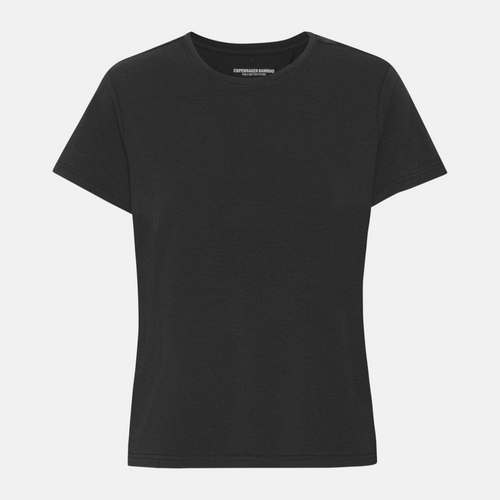
Even a good fibre can be knitted hard and dense, and then the fabric turns stiff whatever the material. A looser knit leaves air between the yarns and a softer surface. That is why two T-shirts in the same fibre can feel entirely different. See bamboo T-shirts for men.
Fabric softener is a shortcut
Softener lays a smooth film on the outside of the fibres and therefore feels soft at once. The price is that the film slows moisture transport and locks in odour. It is softness borrowed from a coating rather than from the fibre, and it disappears after a few washes.
Why the softness lasts
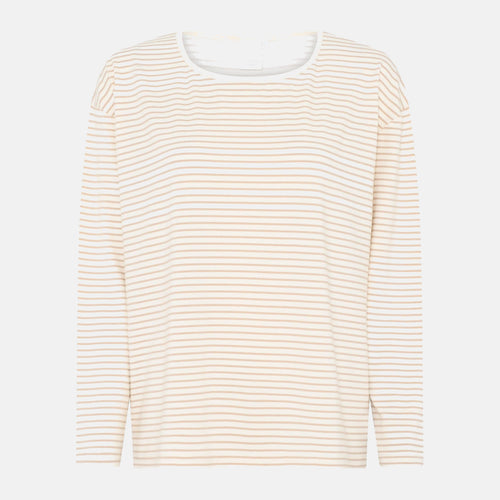
Because the softness comes from the shape of the fibre and not from a treatment, it does not wash out. A T-shirt in bamboo viscose feels much the same after twenty washes, as long as it has not been in the tumble dryer. See bamboo T-shirts for women. See also guide to bamboo and the environment, bamboo lyocell vs. bamboo rayon, bamboo clothing for sensitive skin and washing guide.
Frequently asked questions
Why does bamboo feel softer than cotton?
The fibres are longer and have fewer ends at the surface. It is the number of fibre ends the skin reads as rough or soft.
Does bamboo become less soft over time?
No, if it is washed at 30 degrees without a tumble dryer. The softness comes from the fibre's shape and not from a treatment.
Does fabric softener make fabric softer?
Briefly. It lays a film on the fibres that slows moisture transport and washes off again after a few cycles.
You can find the full range at Bamboo-Clothing.com.