Why bedding feels cool for the first few minutes
Short answer: The feeling comes from the fabric drawing heat away from your skin the moment you touch it. Smooth, dense fabrics do this fastest, which is why they feel coolest when you get into bed. After a few minutes the fabric reaches the same temperature as your skin.
Heat transfer on contact
When your skin touches a material that is cooler than itself, heat moves from the skin into the material. It is the same effect you feel when touching a metal rail or a stone floor. The better the contact between skin and fabric, the more noticeable the coolness, even though the room is the same temperature throughout.
Smooth fabrics conduct best
A smooth fabric has more points of contact with the skin than a rough one with loops or air in between. That is why bamboo viscose and percale feel cooler at first touch than terry-like or brushed surfaces. Air between the fibres insulates, so an airy fabric feels warmer straight away, even at the same temperature.
The effect is brief
After a few minutes the fabric has the same temperature as your skin, and the cool feeling fades. From then on, comfort is no longer about heat transfer but about how the fabric handles moisture and air through the night. That is why the first impression and comfort over the whole night are not always the same.
Moisture during the night
The body releases moisture while you sleep, even if you are not visibly sweating. A fabric that can take up that moisture and let it evaporate feels drier for longer. If the fabric is dense and closed, moisture can linger so it feels clammy. This is where the fibre and the weave make a difference.
In summer
In summer both qualities are an advantage. The cool feeling when you lie down is pleasant on a warm evening, and a fabric that handles moisture well makes it easier to stay comfortable for the rest of the night. More tips for warm nights are in sleep cool in summer with bamboo.
In winter
In winter the same quality is felt as cold at first. The bedding is at room temperature, and in a cool bedroom that can give a small shiver when you get in. The bed warms up quickly from your body, though, and after a few minutes you no longer notice. The duvet thickness matters more for warmth than the cover.
What you can do yourself
To avoid the cold shiver in winter, you can get under the duvet a little earlier or leave a blanket on top during the day. To enhance the cool feeling in summer, air the bedroom in the evening and leave the duvet turned back for a while before you go to bed.
Washing and the surface
Fabric softener leaves a film on the fibres that can make the surface less smooth and less able to handle moisture. Wash bedding without softener and let it dry in the air. That way the fabric keeps its smooth surface and with it the cool feeling when you lie down in the evening.
See the range
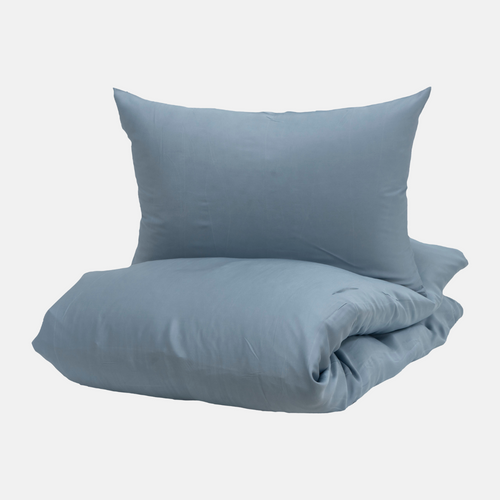
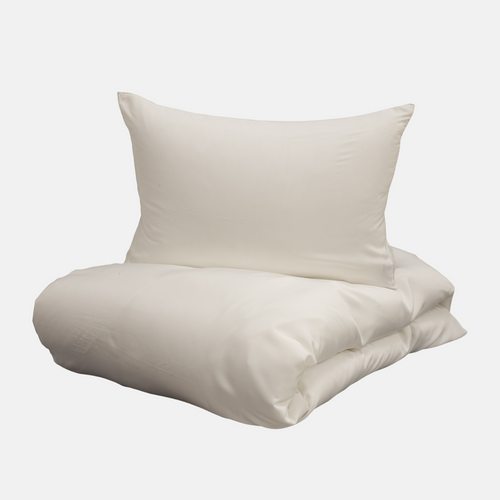
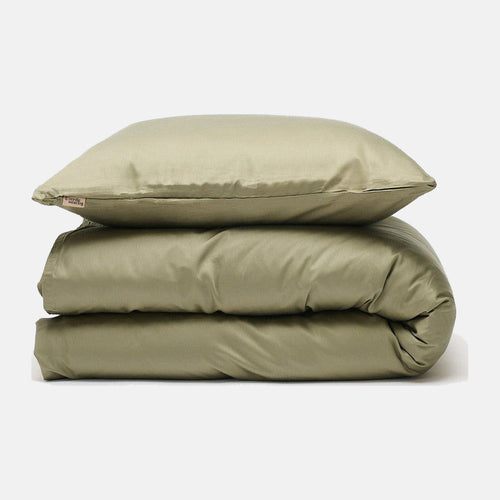
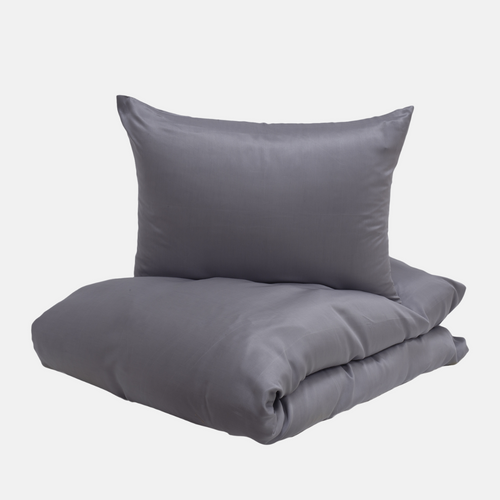
Whether you prefer cool or warmer bedding depends a lot on how you sleep and how warm your bedroom is. A smooth fabric gives the clearest cool feeling at first touch. You can see the current sets, colours and sizes in bamboo bedding.
More about temperature
The term temperature regulation is often used about clothing and bedding, but it covers several different things, from heat transfer to moisture transport. If you want to know more about what the term means and what expectations are realistic, read bamboo and temperature regulation.
Frequently asked questions
Why does bedding feel cold in winter?
Because the fabric draws heat away from the skin at first touch. It is at room temperature and is warmed by your body within a few minutes of getting into bed.
Does the bed stay cool?
No. After a few minutes the fabric reaches skin temperature. From then on, how it feels for the rest of the night depends mainly on how the fabric handles moisture.
Which fabrics feel coolest?
Smooth, dense fabrics such as bamboo viscose and percale, because they make good contact with the skin. Fabrics with loops or air between the fibres feel warmer straight away.
See our range of Nordic Weaving bedding.