White bedding and how to keep it white
Short answer: White bedding turns grey from dye in other laundry and yellowish from cream, hair products and sweat. Wash it separately at 40 degrees, avoid chlorine bleach and fabric softener, and let it dry outdoors when you can.
Wash white separately
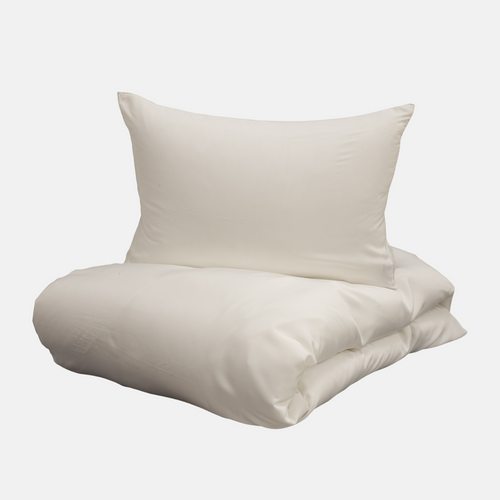
The grey tinge on white bedding usually comes from dye in other laundry in the machine, not from dirt. Even light coloured items can release a little dye, which settles on the white over many washes. Gather white clothing and bedding and wash them together, so colours do not mix and white stays white.
Yellowish marks
Cream, hair products, make-up and sweat leave yellowish marks over time, especially on the pillow and at the head end of the duvet cover. The marks become more visible the longer they are left. If they have set, soak the bedding in lukewarm water with a little detergent for a few hours before washing.
No chlorine
Chlorine bleach may seem like a quick fix, but it breaks down bamboo viscose and in the long run gives a yellowish rather than white tinge. The fabric can also become weaker. Use an ordinary detergent for whites instead and follow the dosage. That keeps bedding white without wearing the fibres.
Sun on the line
Sunlight has a mild bleaching effect, which is an advantage on white but a drawback on coloured clothing. Hang white bedding outside on a sunny day so it dries and looks fresher. More tips on white clothing in general are in how white clothes stay white.
Change the pillowcase more often
The pillow gets dirty fastest, because it is in contact with your face, hair and everything you applied in the evening. Change the pillowcase more often than the rest of the bedding, ideally twice a week, so marks do not have time to set. A couple of spare cases make it easy. See bamboo bedding.
No fabric softener
Fabric softener leaves a film on the fibres that binds residue from dirt and detergent. Over time this makes white bedding dull and slightly grey. Skip the softener and dose detergent for your water hardness. How to wash bedding correctly in other respects is explained in how to wash bamboo bedding.
The temperature
40 degrees is usually enough to get bedding clean when it is washed regularly. A higher temperature does not necessarily remove more dirt, but it can wear the fibres. Most important is that the machine is not overloaded, so water and detergent can reach everything. Fill it no more than three quarters.
Rinse properly
Detergent residue that is not rinsed out can cause a yellowish or grey tinge over time. If in doubt, choose an extra rinse, especially if you live somewhere with hard water. It uses a little more water but helps white bedding stay bright and fresh for longer.
See also
White bedding follows the same basic rules as everything else made from bamboo: low temperature, no softener and drying in the air. The difference is that white must be kept apart from colours and can handle sun. The rest of the rules for washing and care are gathered in the washing guide.
When it has already turned grey
If white bedding has already turned grey, try washing it a few times on its own with a detergent for whites and an extra rinse. Dry it outdoors in the sun. It often becomes lighter again. A grey tinge from years of dye transfer rarely disappears completely, though, so prevention is easier.
Frequently asked questions
Can I use chlorine on white bedding?
No. Chlorine breaks down bamboo viscose and gives a yellowish tinge over time. Use an ordinary detergent for whites instead and dry the bedding in the sun.
Why does white bedding turn grey?
Usually from dye in other laundry in the machine and from softener residue. Wash white items separately and skip the softener, and they will stay bright.
How do I remove yellowish marks on the pillow?
Soak the pillowcase in lukewarm water with a little detergent for a few hours before washing. Change the case more often so marks do not have time to set.
See our range of Nordic Weaving bedding.