Why fabric direction matters in cutting
Short answer: A knitted fabric behaves differently lengthwise and crosswise. If a piece is cut in the wrong direction, the garment stretches wrongly and twists around the body, and it cannot be fixed afterwards once the pieces are cut and sewn together.
The loops have a direction
Knitted fabric consists of rows of loops that run in one particular direction. Lengthwise the loops run like columns, and crosswise they lie as rows. The two directions give the fabric different properties, so it matters how a piece is turned when it is laid on the fabric and cut out.
The stretch is not the same both ways
Jersey stretches most crosswise and least lengthwise. That is why a garment must be cut with the loops in the right direction. If the greatest stretch runs around the body, the garment sits well and gives room. If it runs lengthwise, it becomes tight around the body.
Shrinkage follows direction too
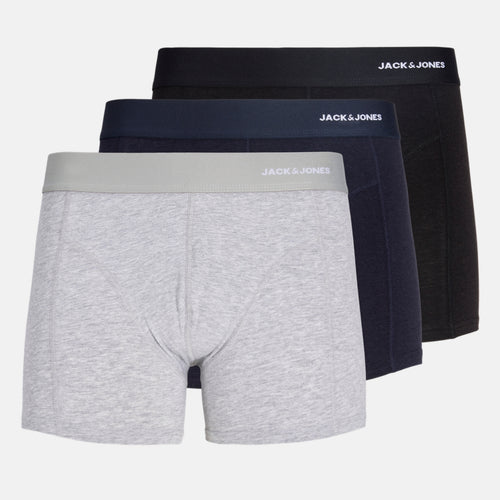
A fabric can shrink more in length than in width. If the piece is cut wrongly, the shrinkage is wrongly distributed, and the garment can become shorter or narrower than you expect. The producer therefore has a fixed rule for direction on each piece. See bestsellers for men.
What happens if a piece is turned
If a piece is turned, the garment can twist, pull wrongly or shrink crooked. The side seams move towards the front or the back, and the sleeves do not hang straight. The fault can arise in several steps, but it always begins at the table, where the piece was laid on the fabric.
Pattern and colour reveal faults
If the fabric is striped or melange, a wrongly cut piece shows at once. The stripes run crooked, or the melange looks different from the rest of the garment. Patterned fabrics are therefore easier to check, because anyone can see the fault before the garment leaves the factory.
Plain colour shows it only in use
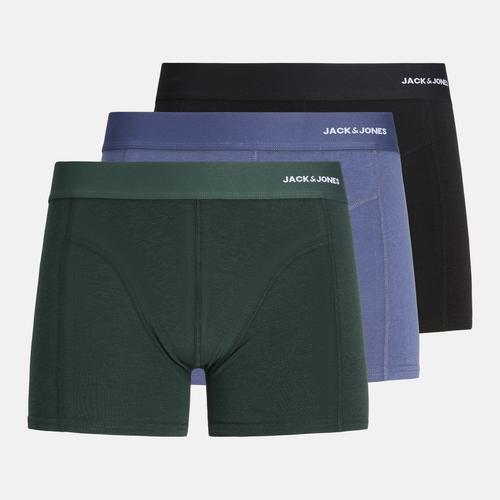
On plain colours you see it only in use. The garment twists slowly as it is washed and worn, and in the end the seam lies in the wrong place. It is annoying, but a good reason to look at the fit after a few washes. See Resteröds and Jack and Jones for garments in plain jersey.
How to check the direction yourself
Stretch the fabric in both directions and feel the difference. If the stretch is greatest crosswise, the loops sit as they should. Look at the seams too: they should run straight down the side of the body. The check can be done on a new garment before you use it, and it takes only a moment.
If a garment twists
A garment that twists around the body can be down to direction, but also to washing and drying. Wash it as the label says and hang it up without pulling. If it still twists, it was probably cut crooked, and you can contact customer service, who can help find a solution.
Why it cannot be fixed
The piece has to be cut again, and the garment cannot be remade afterwards. Once the fabric is cut and sewn, the direction sits fixed in the seams, and no sewing can straighten it again. Cutting is therefore one of the steps where it pays to be careful, even if it takes longer.
Frequently asked questions
Can you see the direction on a finished garment?
Often yes. Stretch the fabric in both directions and feel the difference, and look at the seams, which should run straight down the side of the body.
What happens if a piece is turned?
The garment can twist, pull wrongly or shrink crooked, and it can be hard to see before it has been washed a few times.
Is it a fault that can be fixed?
No. The piece has to be cut again, and the garment cannot be remade afterwards, so it is about cutting right the first time.
You can find the full range at Bamboo-Clothing.com.